
Ball Sort Magic: Color Puzzle
Passion Fruit JoyCasual
4.81.47K Reviews
- Version
- 1.0.14
- Installs
- 10.00M
- Age Rating
- Everyone
Screenshots
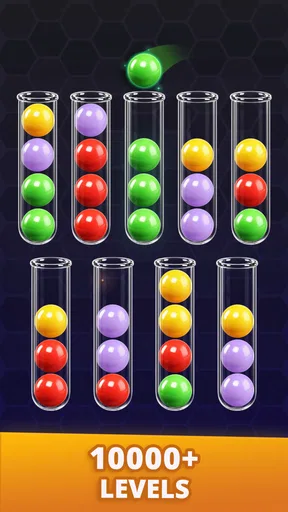
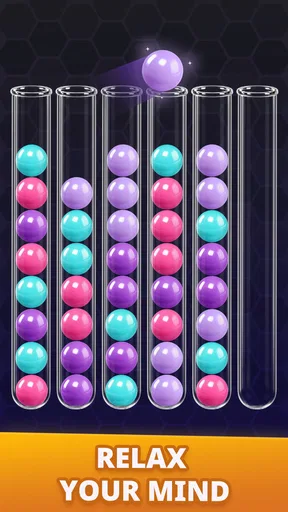
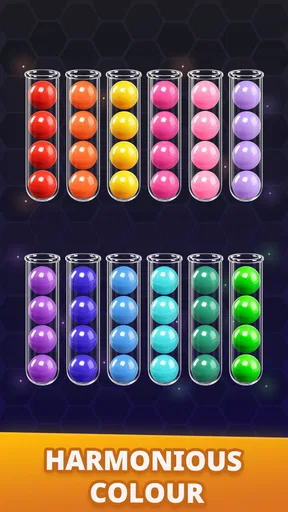
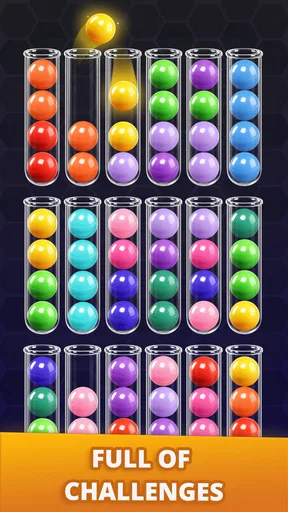
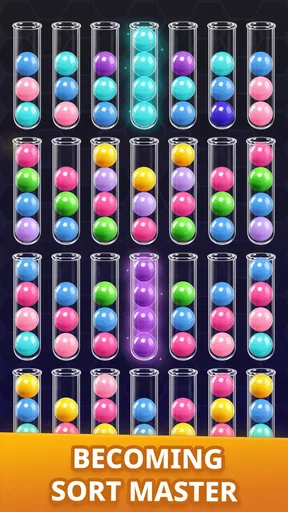
Our Review of Ball Sort Magic: Color Puzzle
 Analysis by Appyee
I spent time with Ball Sort Magic: Color Puzzle as a quiet, pick-up-and-play game rather than a traditional action title. Its central idea is simple: sort colored balls into matching tubes, using empty space carefully so that one move does not block the next. That simplicity is exactly what makes it approachable, but it also means the experience depends heavily on how comfortable you are with repeated visual scanning, tapping, and gradually increasing mental planning.
Developed by Passion Fruit Joy, this free casual game is aimed at Everyone and runs on Android devices using version 8.0 or later. It has already reached over 10 million installs, with a 4.8 average from around 34 thousand ratings. Those figures suggest that the format has found a broad audience, but they do not change the basic truth of the game: this is best understood as a relaxing sorting exercise, not a deep strategy game or a fast entertainment app.
How clearly the game communicates its puzzle
I find the game’s clearest strength is that its objective can be understood by looking at the board, without first learning a long set of rules. That makes it easy to pick up during a short break, though color-based sorting still asks for comfortable visual focus. Next, I’ll look at how that straightforward presentation affects the way I approach each move.
Readable goals and a low-pressure first step
The strongest accessibility quality is the immediate clarity of the task. You do not need to learn a character, map, story, or complicated control scheme before playing. The board presents containers and colored balls, and the objective is to organize them by color. For someone who prefers games with a short learning curve, that directness is valuable. I could begin thinking about the puzzle almost immediately instead of spending time decoding menus or instructions.
The visual structure also suits short sessions. A player can look at the board, identify the available empty tube, and decide whether moving one stack will create useful room. This makes the game comfortable for a coffee break, a waiting room, or a few minutes before bed. It does not demand the continuous attention of a racing game, and there is no need to remember a long sequence of story events between sessions.
That clarity has a limit, though. Color sorting is the heart of the game, so the board asks the player to distinguish between several visual elements at once. If two shades look similar on a particular screen, or if the display is small, the mental work becomes less about planning and more about checking which ball belongs where. A larger phone or a bright, clear display can make a meaningful difference.
Navigation that stays out of the way
In my experience, Ball Sort Magic works best when the interface remains secondary to the puzzle. The game does not need a large collection of controls to explain its basic loop. That is useful for people who find dense game menus tiring or confusing. The fewer decisions that sit between opening the app and starting a level, the easier it is to use spontaneously.
Still, simple navigation should not be confused with complete accessibility. A calm board can be easy to understand while individual controls remain difficult for someone with limited precision, reduced contrast sensitivity, or trouble distinguishing colors. The game’s basic concept is readable, but the practical experience will depend on the player’s device, vision, touch accuracy, and tolerance for repetition.
I would recommend beginning with a few untimed sessions rather than judging the game from a single difficult board. The useful question is not whether every puzzle feels obvious. It is whether you can inspect the arrangement, make a move, and recover from a less-than-perfect decision without feeling lost. For many casual players, that rhythm is more important than a sophisticated menu system.
Why the sorting format is mentally approachable
The puzzles use a familiar kind of reasoning: preserve open space, avoid burying a needed color, and think one or two moves ahead before committing. That makes the game approachable for people who enjoy logic but do not want arithmetic, vocabulary, or complex rules. It can also work as a gentle transition into puzzle games for someone who normally avoids them.
One useful habit is to pause before moving the first ball. I found that scanning the full board first is more effective than immediately matching the most obvious color. A quick inventory of which tubes are nearly complete, which colors are buried, and where the spare capacity sits can prevent unnecessary reshuffling. This is a small change, but it reduces the frustration that comes from treating every move as an isolated match.
Motor and sensory considerations during play
The control style is naturally less demanding than games that require swipes, rapid reactions, or several buttons at once. Sorting is generally a deliberate activity, so players who prefer slower interaction may find it more manageable than an arcade game. You can focus on one intended move at a time instead of coordinating movement with a timer or reacting to an opponent.
That does not make the game universally easy to operate. A tap-based puzzle still asks you to select the correct tube or ball area accurately. Players with hand tremors, reduced fine-motor control, or fatigue may find repeated selections uncomfortable, especially during longer sessions. The most practical approach is to play in short bursts, support the phone securely, and avoid trying to solve a large board while holding the device awkwardly in one hand.
There is also a sensory trade-off. The colored balls provide the main visual language, so players with color-vision differences may need more time to verify matches. I would not rely on color alone if a shade is uncertain; instead, compare the full arrangement and use the position of the balls and the available spaces to reason through the move. If the visual distinctions remain unclear on your device, this may not be the right puzzle format, even if the rules themselves are easy.
For players who become overwhelmed by noisy or fast games, the slower sorting structure can feel more comfortable. It gives the eyes and mind a single board to inspect rather than a constantly changing scene. On the other hand, anyone who needs strong nonvisual cues, large tactile targets, or extensive control customization should approach it cautiously. The game’s simplicity does not automatically provide those accommodations.
A practical session for different energy levels
One reason I can imagine returning to this game is that it fits several levels of concentration. When I have only a little attention available, I can treat a board as a small visual exercise and stop after a short attempt. When I am more focused, I can plan the order of colors and try to avoid wasting the empty tube. That flexibility is useful for people whose energy changes during the day.
A realistic example is a short break between errands. Instead of opening a competitive game that may require a full round, you can work through a sorting board until your attention is needed elsewhere. The same quality can help someone who wants a quiet evening activity without committing to a story campaign. However, players who need a clear stopping point may find a puzzle’s “one more move” rhythm surprisingly sticky. Setting a personal session limit is sensible if you are using the game to relax rather than to fill an entire evening.
Offline use and situational access
The game is presented as an offline ball-sorting experience, which makes it particularly suitable for places where connectivity is unreliable or unwanted. That can include travel, underground transport, waiting areas, or a phone used with mobile data turned off. An offline-friendly puzzle also avoids the pressure to coordinate with other players, respond to messages inside a game, or maintain a live session.
This situational strength matters for accessibility because access is not only about disability. A person may have limited data, an inconsistent connection, a shared living space, or a schedule that makes online games inconvenient. A self-contained sorting game can be easier to fit around those circumstances than a multiplayer title or a puzzle that depends on constant online activity.
At the same time, offline suitability should not be mistaken for universal availability. You still need a compatible Android device, and the game requires Android 8.0 or later. Someone using an older phone or an unsupported operating system will need a different option. The free price removes an obvious financial barrier, but device compatibility remains a practical one.
Where it compares well with other casual puzzles
Compared with match-three games, Ball Sort Magic is less dependent on quick pattern recognition and chain reactions. You are not trying to create a dramatic cascade before the board changes. Compared with word puzzles, it avoids spelling and language knowledge. Compared with physics games, it does not ask you to estimate trajectories or manipulate moving objects. Those differences make it a good choice for a player who wants a quiet, visually organized logic task.
Its weakness is variety. A match-three game may offer changing objectives, special pieces, or a more energetic sense of progress. A word game can build vocabulary, while a traditional strategy game may offer deeper long-term planning. Ball Sort Magic stays close to its sorting premise, so its value depends on whether you enjoy refining the same kind of reasoning across different arrangements.
I would choose it over a competitive alternative when I want control over the pace and no social pressure. I would choose another game when I want a stronger sense of discovery, narrative, physical challenge, or skill development beyond visual organization. That distinction is important: this is a focused casual tool, not an all-purpose game collection.
Small techniques that make the boards easier
The first useful technique is to protect empty space. An unused tube is not merely a place to park a ball; it is your working area. Filling it too early can leave no room to uncover a buried color. Before moving a stack, I ask whether the move creates future flexibility or only produces an immediate match.
The second technique is to prioritize access rather than completion. It is tempting to finish the color that is already close to being sorted, but uncovering a blocked color can be more valuable. A nearly complete tube that does not reveal anything may be less useful than a temporary move that exposes the layer underneath. This changes the game from simple matching into a small exercise in managing space.
The third technique is to slow down after a mistake instead of restarting mentally in a panic. A misplaced move may still be recoverable if you use the remaining empty capacity carefully. I found that treating the board as a sequence of reversible-looking opportunities, rather than as a test of perfect play, makes the experience more relaxing. It also helps players who dislike the feeling that one wrong tap ruins everything.
These techniques are not complicated, but they are the difference between tapping randomly and actually reading the board. They also reveal the game’s main cognitive benefit: it encourages visual sequencing, short-term planning, and restraint without requiring a complicated rulebook.
Remaining barriers and who may want to skip it
The biggest barrier is the reliance on color as the primary identifier. Players with color-vision limitations may struggle if the game does not provide enough alternative visual information. People with low vision may also find small balls and tightly grouped tubes difficult to inspect. A large screen can help, but it cannot solve every contrast or identification problem.
Another barrier is repetition. The same basic action—moving balls between tubes—forms the whole experience. Someone with attention difficulties may appreciate the short, contained tasks, but another player may lose interest because the game does not provide enough change. Likewise, a person seeking active movement, social interaction, or a narrative goal will probably find the format too narrow.
There is a cognitive barrier as well. Although the rules are easy to learn, later arrangements can require holding several possible moves in mind. Players who are tired, distracted, or experiencing mental overload may find that a supposedly relaxing puzzle becomes frustrating. In that situation, a game with simpler one-step challenges, audio-led interaction, or more explicit guidance could be a better fit.
I also would not recommend it as the first choice for someone who needs extensive accessibility settings. The game’s appeal comes from its uncomplicated board, but that means the player should test whether the visual presentation and touch interaction work comfortably on their own device. A free download makes trying it low-risk, yet comfort should be judged personally rather than assumed from the Everyone rating.
My inclusive verdict after using it
Ball Sort Magic is a pleasant option for people who want a free, quiet casual puzzle that can fit around an unpredictable day. Its clearest strengths are the direct sorting objective, deliberate pace, low language demand, and suitability for offline play. The version available now is 1.0.14, and the game’s broad audience is reflected in its strong 4.8 average and more than 1.5 thousand written reviews, but my recommendation is based more on the focused design than on popularity.
I would suggest it to a friend who enjoys organizing patterns, wants something calmer than an action game, or needs a puzzle that can be played in short sessions without an online opponent. I would explain the color dependence first, especially to anyone with color-vision or low-vision concerns, and I would mention that repeated tapping and repeated sorting may not suit every motor or attention profile.
The best way to approach it is as a flexible visual break, not as a complete accessibility solution or a deep strategy experience. If the colors are easy for you to distinguish and the touch targets feel comfortable, the game offers a simple but surprisingly thoughtful routine: inspect, preserve space, uncover what is hidden, and sort with patience. If you need strong nonvisual feedback, extensive customization, or broader gameplay variety, another casual puzzle will probably serve you better.
Verdict
Strengths of Ball Sort Magic: Color Puzzle
- Simple color-sorting rules make it easy to learn without a tutorial.
- Short levels are convenient for quick breaks or casual play.
- Clean visuals keep the colored balls easy to distinguish.
- Progressive difficulty provides a gradual challenge for puzzle fans.
- Offline play makes it useful when you have no internet connection.
Limitations of Ball Sort Magic: Color Puzzle
- Later puzzles can feel repetitive once the sorting pattern becomes familiar.
- Undo and extra-tube options may be limited or tied to rewards.
- Some levels may require trial and error rather than pure planning.
- Ads can interrupt the flow between completed puzzles.
- Players seeking action or story content may find the gameplay too minimal.
Other Releases by Passion Fruit Joy
View All
Mahjong Breeze - Tile Match
Casual4.9
Similar Picks in This Category
View All
My Talking Angela
Outfit7 Limited4.2

My Talking Tom
Outfit7 Limited4.3

Pou
Zakeh4.2

My Talking Tom 2: Pet Game
Outfit7 Limited4.3

Candy Crush Saga
King4.6

Bridge Race
Supersonic Studios LTD4.1
Frequently Asked Questions
What is Ball Sort Magic: Color Puzzle?
Ball Sort Magic: Color Puzzle is a casual sorting game in which you move colored balls between tubes until every tube contains balls of only one color. The rules are simple, but the puzzles become more challenging as the number of colors, tubes, and possible moves increases. It is designed for short relaxing sessions, although difficult levels can require careful planning and occasional retries.
How do you play Ball Sort Magic: Color Puzzle?
To play, tap a tube to select the top ball and then tap another tube to move it. A ball can generally be placed only on an empty tube or on top of a ball with the same color, and each tube has limited space. The objective is to organize all matching colors together. Thinking several moves ahead is important because an apparently useful move can quickly block the remaining options.
Can Ball Sort Magic: Color Puzzle be played offline?
The core sorting puzzles can usually be enjoyed without a constant internet connection, which makes the game convenient for travel, waiting rooms, or quick breaks. However, some features may depend on connectivity, including advertisements, cloud-related services, special events, reward systems, or updates. If offline access is important to you, it is best to test the game after installation and check its current store description.
Is Ball Sort Magic: Color Puzzle free to download and play?
Ball Sort Magic: Color Puzzle is typically offered as a free download, allowing players to start solving levels without paying upfront. Like many free mobile puzzle games, it may include advertising, optional purchases, extra lives, hints, or other convenience features. The exact pricing and monetization can change between Android and iOS versions, so review the relevant app-store listing before downloading.
Is Ball Sort Magic: Color Puzzle suitable for all ages?
The game uses simple controls, nonviolent gameplay, and color-based logic, so it can be suitable for children, teenagers, and adults who enjoy casual puzzles. Younger players may need help understanding the strategy or recognizing certain colors, particularly on smaller screens. Parents should also review the age rating, advertising, privacy information, and any in-app purchase options before allowing children to play.
Play our best games!


